Say a shopper finds two codes for a £45 backpack. One page claims “214 people saved today,” but nobody can explain what was counted. Another shows recent successful and failed reports with eligibility notes. Social proof helps people judge uncertain choices, but a convincing number is useful only when it represents something real. Inventing the number creates deception rather than evidence.
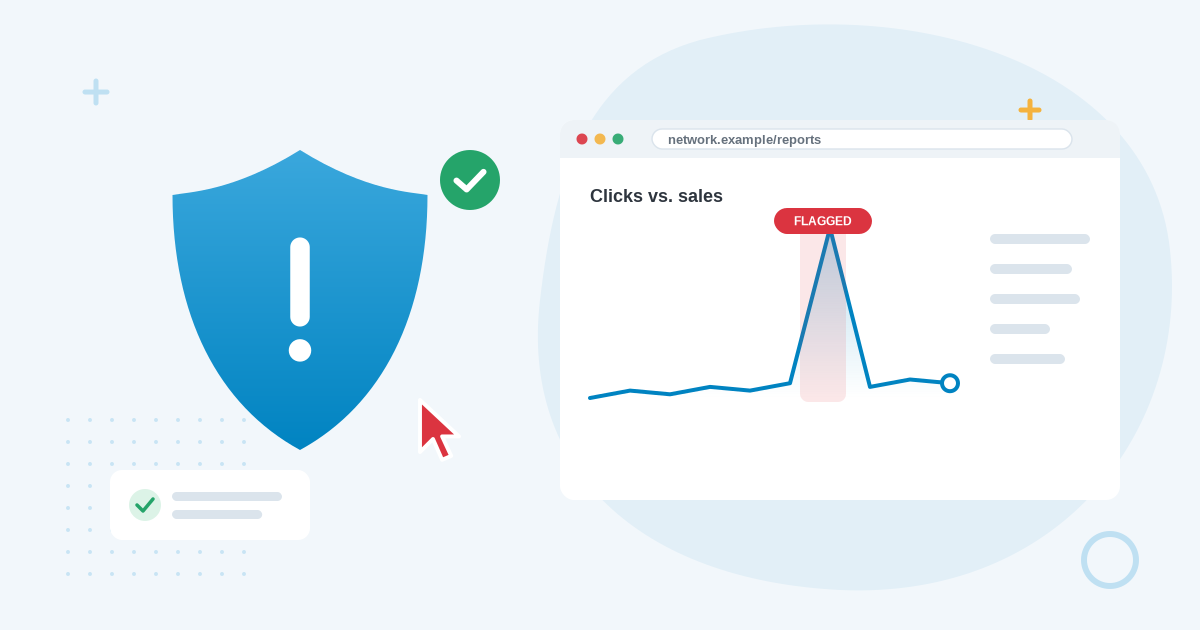
couponPHP is a self-hosted PHP coupon and deal script with reporting for views, clicks, favorites and comments. Those reporting features can support honest activity labels. They don’t turn a click into a verified purchase or justify the fake actions promoted in the archived post.
What social proof means for a coupon shopper
An empty comment section can make a new site feel untested. That doesn’t mean it needs imaginary shoppers. It needs evidence appropriate to what the visitor is trying to decide: “Will this code work for my basket?”
Cialdini discussed social proof in Influence: The Psychology of Persuasion (1984). People look to others, particularly similar people, for guidance when the situation is uncertain; Wikipedia’s publication history and account of the principle provide that context.[1] For coupon sites, recent reports from shoppers facing the same restrictions are more informative than a vague popularity badge.
You can separate community evidence from editorial evidence. “A reader reported success yesterday” and “Our editor tested the code today” are different claims. Both may help, but an editor’s check shouldn’t impersonate a customer testimonial.
Fake reviews and fabricated engagement carry legal risk
A made-up profile saying “I saved £12” presents an experience that never happened. The US FTC announced its final Consumer Reviews and Testimonials Rule on August 14, 2024; it took effect on October 21, 2024.[2] [3] Covered fabricated reviews and testimonials, including those attributed to nonexistent people or people without the claimed experience, are illegal.
The rule also prohibits specified buying or selling of fake social-media influence indicators, such as bot-generated followers or views, when the required knowledge and commercial-purpose conditions are met. A fake user used as a reviewer is directly relevant to the fabricated-review prohibition. Buying fake engagement to misrepresent commercial influence can trigger the indicator prohibition.
The scope matters. A locally invented coupon-click counter isn’t automatically a social-media indicator covered by that particular provision. That doesn’t make it lawful: misleading claims can still violate the FTC Act. Treat fabricated reviews, fake users presented as real customers and fake engagement as practices to remove, not workarounds to refine.
In the UK, the Digital Markets, Competition and Consumers Act 2024, Schedule 20 paragraph 13, came into force on April 6, 2025.[4] It bans fake reviews, concealed incentivised reviews and misleading consumer-review information. Review publishers must take reasonable and proportionate steps to prevent and remove prohibited material. The CMA’s guidance (2025) explains the need for published policies, risk assessments and detection, investigation and action processes.[5]
Your affiliate fraud controls should therefore cover public trust signals as well as referral tracking. Legal advice may be needed for your circumstances, but the practical decision is straightforward: don’t manufacture customer evidence.
Use real verified-code counts with an audit trail
A “verified” badge can become misleading when every imported code receives it automatically. Importing an offer and checking its application are separate events.
You can store who checked the code, when they checked it, the eligible basket and the outcome. The public label might read “Editor checked: 28 November 2026, UK delivery, full-price items.” A store-wide count should include only offers that meet your stated verification definition.
These records needn’t expose personal data. An internal check ID can connect the badge to evidence. If a code changes or a later check fails, update its status instead of leaving yesterday’s reassurance attached to today’s offer. The coupon fraud guide provides related checks for suspicious submissions.
Label usage counts as the events you actually observe
A copied code doesn’t prove redemption. A click doesn’t prove that someone bought anything. Turning outgoing clicks into “people who saved” overstates the available evidence.
You can display “Code revealed 17 times this week” if that’s the measured event. Bot filtering, excluding staff tests and deduplicating repeat actions make the count more useful. If you claim unique users, your measurement must support that label; otherwise count actions rather than people.
Actual redemption counts require reliable confirmation from the merchant or another legitimate source. If that data isn’t available, don’t imply that your site has it. Honest social proof can be modest and still help someone understand whether an offer has recent interest.
Show success rates with failures and sample sizes
A 100% success badge based on one report conceals how little you know. A useful rate needs a denominator, a period and a clear explanation of whose reports it represents.
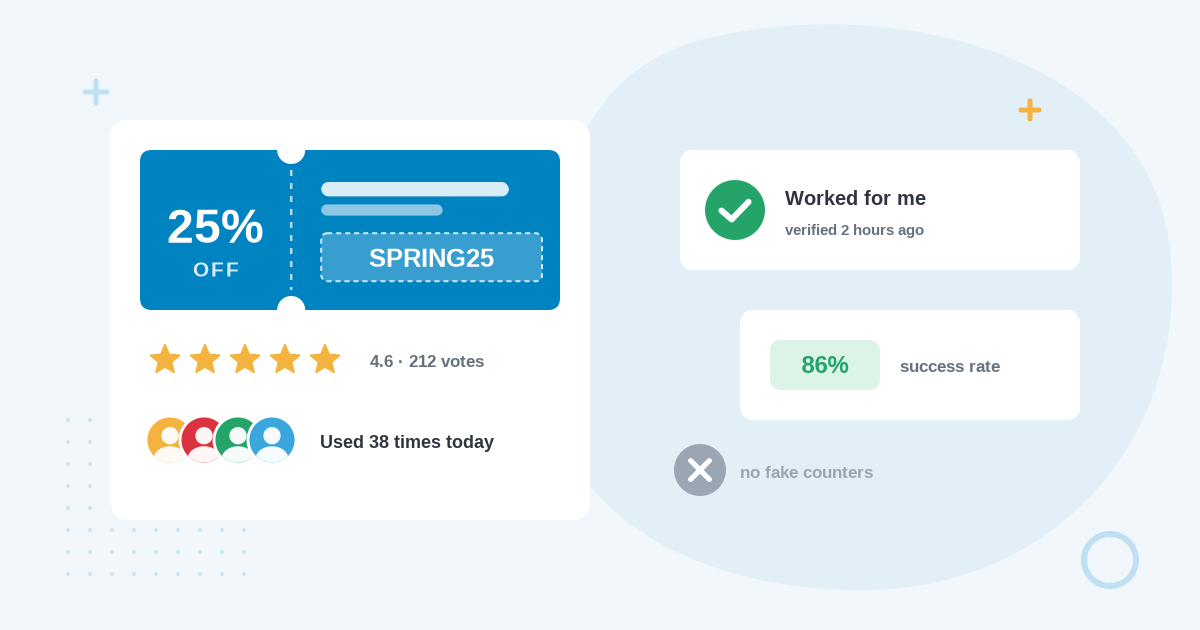
Say 24 genuine reports arrive during seven days: 18 successful and six failed. The observed success rate is 18 ÷ (18 + 6) × 100 = 75%. The label can say “18 of 24 shopper reports marked successful, past seven days.” It shouldn’t promise a 75% chance for every future basket.
A failure may expose a new-customer restriction or excluded product rather than an invalid code. You can preserve the report and add that context. Removing negative outcomes merely to lift a rating risks misleading review information. Consistent moderation protects the usefulness of the data; selective praise does the opposite.
A new site can admit that it’s new
No recent reports is a normal starting point. A neutral “No shopper reports yet” label, an actual editorial check and visible offer restrictions give people something useful without invented popularity.
A short feedback request after the shopper returns can invite “Worked” or “Didn’t work,” with optional context. You shouldn’t condition rewards on positive feedback. A coupon marketing strategy can plan genuine participation without making fabricated activity a launch requirement.
The original 2016 post
Editor’s note: the fake-activity approach described below is no longer recommended; fabricated customer evidence should not be published.
The recovered text is preserved verbatim as historical archive text.
In case you have a Professional and above license you possess a Pro Extras package that includes Fake Actions scripts allowing you to generate user activity such as:
- Add new users
- Vote for coupons
- Update Coupon / Deal Owners
- Favorite coupons
That can be quite handy when your site is new and you don’t want to scary you visitors off with empty content, no one likes to be the first to click Like and no one likes dead sites.
Recently we’ve added a new functionality to this script, allowing you to generate users’ clicks on coupons that can be used in the FlatUI template. This is how it looks:
Since this package is not available for all the clients, but only to those with Monthly, Professional and Developer licenses we don’t share publicly new archive, but you can write us at support@couponphp.com to get the update for free in case you have a proper license.
Frequently asked questions
What is social proof on a coupon website?
Social proof is information about other people’s behavior or experience that helps a shopper decide what to trust. On a coupon site, genuine user reports and honestly labeled activity counts can provide it. An editor’s code check is useful evidence too, but it should be labeled as an editorial check rather than presented as a customer’s experience.
Are fake coupon reviews and activity counters legal?
US law prohibits covered fabricated reviews and testimonials under the FTC’s rule effective October 21, 2024. The rule also bans specified buying and selling of fake social-media influence indicators. Other invented counters may be deceptive under broader law. UK rules under the DMCC Act ban fake reviews and misleading review information, with duties for review publishers.
How should I calculate a coupon success rate?
Divide genuine successful reports by all genuine successful and failed reports in the stated reporting period, then multiply by 100. Show the sample size and dates beside the result. Remove duplicates and identified abuse using a consistent policy. Do not treat code reveals, clicks or missing feedback as evidence that a coupon worked.
Retire every number you can’t explain
Your strongest social proof improvement may be subtraction. Remove any badge, profile or counter that lacks a genuine source, then replace it with a precisely labeled event or a real verification record.
References
- Wikipedia: Influence publication history and social proof, accessed 2026
- FTC: Final rule banning fake reviews and testimonials, 2024
- FTC: Consumer Reviews and Testimonials Rule questions and answers, 2024
- UK Parliament: DMCC Act 2024, Schedule 20 paragraph 13 and commencement information
- CMA: Short guide for businesses publishing consumer reviews, 2025