
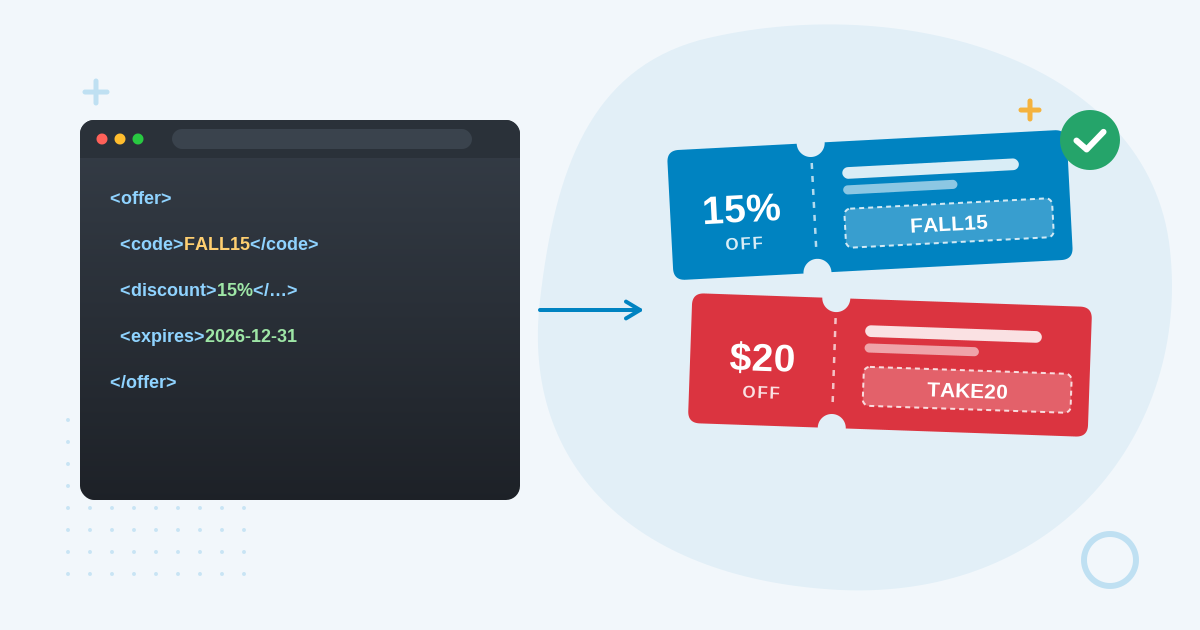
Say your Denver pet-deals site imports a dog-food promotion and sends it to newsletter subscribers. The offer looks correct, but approval for the website may not cover that email traffic. A FlexOffers affiliate connection needs permissions attached to the places you promote, not just credentials that return data. Otherwise, an efficient import can spread an unauthorized placement faster than an editor notices.
couponPHP is a self-hosted PHP coupon and deal website script. Its FlexOffers plugin was built to pull available coupons and deals from an account, manually or on cron. The useful operating model is to connect that automation to a record of what each advertiser has actually approved.
How the FlexOffers affiliate model works
FlexOffers connects advertisers with publishers and provides promotional tools, reporting and feeds. Advertisers are the businesses you promote. As the publisher, you refer shoppers through tracking links under the applicable program terms.
Wikipedia’s Affiliate marketing overview, accessed in 2026, describes commissions tied to referred visits, signups or sales.[1] That general definition doesn’t tell you which action a particular merchant pays for, or whether a coupon changes the payout. Those details belong in your advertiser review.
FlexOffers offers product and promotional data, including coupon and promotion feeds. These aren’t interchangeable. A product record might contain a price and landing page without a coupon code. Your site should display that as a deal when justified, rather than invent a code to fill an empty box.
Apply with a site a reviewer can understand
A directory containing hundreds of empty merchant pages doesn’t explain why an advertiser should work with you. A smaller, finished site can make your proposal clearer: it shows the audience, the promotion format and the information shoppers will see.
Before submitting a publisher application, prepare an accurate business description and register the traffic sources you intend to use. That includes your actual coupon domain, rather than a different site you hope will look more established. Complete the account information requested for verification and payments, and review the network agreement.
Your application should explain where offers appear, how you acquire visitors, and whether you use email, paid traffic, cashback or user-submitted coupons. If your traffic is modest, report it honestly. A focused proposal to reach relevant shoppers is more useful than an unsupported growth claim.
Network acceptance and advertiser acceptance are separate. Apply to relevant advertiser programs and wait for the appropriate authorization before publishing their monetized offers. Our coupon affiliate program guide provides a framework for choosing relationships that fit your audience.
Keep approval attached to each traffic source
A second website can look like a harmless extension of the first. But transferring links between domains can break the relationship between an approved source and the traffic actually being sent.
FlexOffers’ current agreement distinguishes approved traffic sources from advertiser-specific approvals. Each source needs the relevant permission; authorization for one source isn’t a general license to distribute the same content elsewhere.
A simple merchant record can hold your domain, advertiser program, approval status and permitted channels. Keep newsletter distribution separate from website placement. If you later launch a browser extension or offer cashback, ask about that model before using existing links.
This discipline also helps troubleshooting. When an advertiser queries traffic, you’ll know which placement sent it. Without that record, a correct-looking commission total can hide a source that was never approved.
Check coupon rules before the first import
A working discount isn’t evidence that your site may promote it. For example, a customer might submit a code from a private retention email. It could reduce the basket price while remaining outside the advertiser’s permitted coupon inventory.
For each program, record which codes may be published and whether customer-submitted, exclusive or email-only promotions are excluded. Check the commissionable products, new-customer rules, referral window and attribution rules. The referral window is the period during which an eligible referral can receive credit; it isn’t a promise that every later purchase will qualify.
Paid search restrictions deserve their own line in your notes, including trademark bidding. Email permission and cashback permission deserve separate answers too. Don’t treat silence as approval.
Check reversals and payment conditions before comparing advertised rates. A high provisional commission means little if most of your audience buys excluded products. Our affiliate metrics guide explains why approved earnings and reversals are more useful than clicks alone.
Import offers without multiplying duplicates
A promotion can arrive through more than one source. If both feeds create a new store from its display name, “Harbor Pet Supply” and “Harbor Pet Supply US” could become competing pages on your own site.
A safer coupon API process uses a local merchant record linked to each source’s advertiser identifier. Store the source offer ID separately from the visible title, and preserve the tracking URL associated with its approved source. Don’t attach one network’s reporting labels to another network’s link.
A practical rollout has four stages:
- Check your account’s current feed access and whether the installed connector supports its authentication and fields.
- Import a small batch into a review queue. Inspect codes, restrictions, destinations, dates and country targeting.
- Repeat that import. Existing source IDs should update rather than become additional coupons.
- Schedule cron after the manual tests pass, with logging and protection against overlapping runs.
Keep editorial descriptions separate from imported fields. Otherwise, a refresh can erase the explanation that made a coupon useful. An absent offer also needs careful handling: an incomplete download shouldn’t be mistaken for an instruction to expire every missing record.
Give readers an honest reason to trust an offer
An API import doesn’t prove that a coupon was tested at checkout. Labels such as “verified today” need a real verification event, not the timestamp of a scheduled download.
The FTC (2023) says commission relationships should be disclosed clearly and conspicuously near the recommendation.[2] A mobile reader should understand that you can earn money before following the offer. Our affiliate disclosure guide covers placement without burying the explanation in a footer.
The original 2016 announcement
This recovered announcement records the plugin’s original behavior and commercial terms. The historical price and availability below should not be read as current purchasing or compatibility information.
We are delighted to inform you that the FlexOffers integration plugin for CouponPHP script is ready for download.
It can be run manually from your admin panel or automatically from your server’s cron jobs interface.
It automatically imports all the available coupons and deals from your account and creates new stores if they haven’t been created before.
The plugin’s price is $29 and it can be purchased in your member area. It has the same limits on the domains it can be installed on as your CouponPHP license.
Frequently asked questions
What is a FlexOffers affiliate publisher?
A FlexOffers affiliate publisher promotes participating advertisers through approved traffic sources and earns commission when the program’s qualifying conditions are met. For a coupon site, those conditions include the advertiser relationship and permitted promotional methods. A network account alone does not authorize every advertiser, website, newsletter or coupon code.
Can I use the same advertiser links on two coupon sites?
Not automatically. FlexOffers distinguishes traffic sources and requires the relevant advertiser approval for each source. If you operate a second domain or introduce a newsletter, check how that source must be registered and approved before distributing links. Keeping source permissions separate also makes performance reports easier to interpret.
Does the old plugin still work with current feeds?
The recovered announcement confirms what the integration did in 2016, not its present compatibility. Before relying on it, check current credentials, data access, authentication and field mapping. Test a small manual import and repeat it to confirm updates do not create duplicates. Schedule automatic runs only after those checks pass.


