
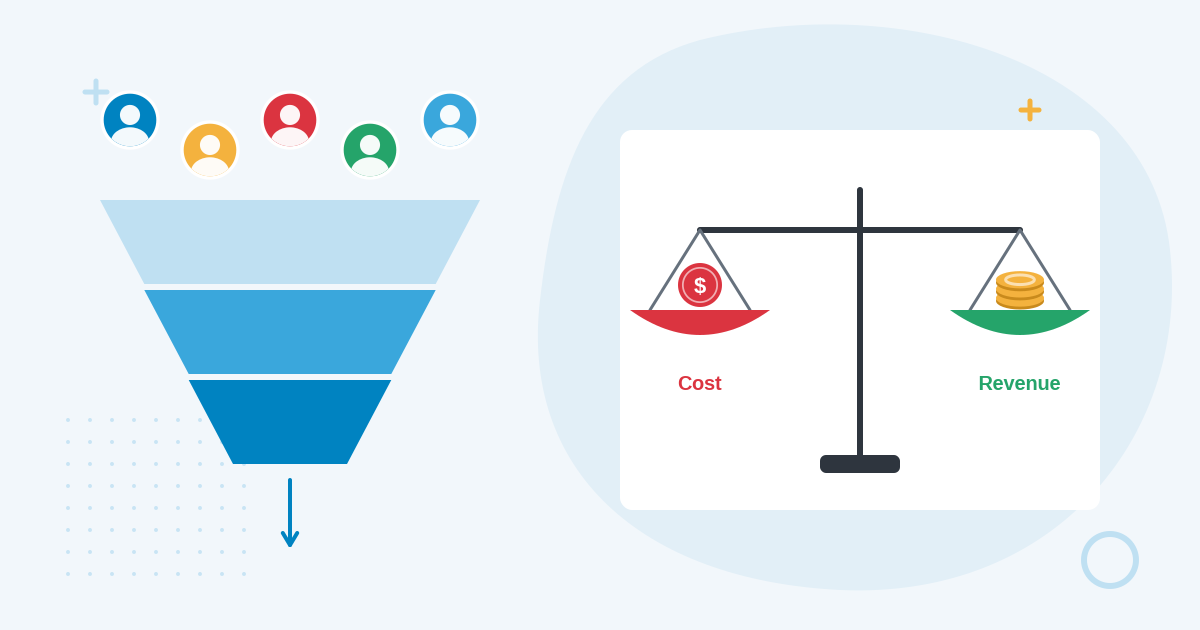
Ten thousand visits can produce no approved commission. Say a coupon publisher buys a £30 package and watches the analytics chart rise while the merchant dashboard stays empty. The visits might be bots, uninterested people, or shoppers outside the offer’s country. You can’t tell from the total alone.
If you plan to buy website traffic, judge the source and the resulting earnings together. A cheap visit that cannot produce a permitted referral has no useful acquisition value.
couponPHP is a self-hosted PHP coupon and deal website script with outgoing-click reporting. That can help you inspect the visit-to-merchant step, but a recorded click doesn’t prove a human shopper or an approved sale.
What do you get when you buy website traffic?
A traffic package describes a quantity. It may tell you almost nothing about how someone arrives or why they would want a coupon. A browser loading your page isn’t the same as a person choosing your offer.
Paid traffic can come from legitimate advertising:
- PPC: pay-per-click advertising charges for an ad click. Search ads can reach deal shoppers if the program permits your keywords and destination.
- Native advertising: a paid placement resembles surrounding content. The FTC’s native-advertising guidance (2015) says consumers must not be misled about its commercial nature; necessary disclosures must be clear and prominent. [1]
- Push advertising: genuine notification campaigns can send opted-in users to an offer. W3C’s Push API specification, accessed in 2026, requires permission for push subscriptions. Ask how the audience subscribed and distinguish genuine notifications from on-page ads styled to look like them. [2]
These formats aren’t automatic affiliate approval. Merchants may restrict brand bidding, direct linking, incentives, or placements. Human traffic can still be prohibited or unprofitable.
Bot traffic comes from automated software rather than people. Click farms use people, but paid clicking doesn’t establish shopping intent either. Both can create misleading activity. Your purchase should identify the advertising placement and audience, not promise a realistic-looking chart.
Why bot traffic can become affiliate fraud
A crawler isn’t bought software pretending to make referrals. Don’t route test automation through live affiliate links or count it as customer demand.
Mangió and Di Domenico (2022) describe affiliate fraud as conduct forbidden by program terms or law, including click bots that artificially inflate affiliate revenues. Passing automated clicks or fake leads off as genuine breaches rules against fraudulent referrals; your current agreement determines the consequences. [3]
The FTC (2020) distinguishes legitimate bots from deceptive uses, including inflated advertising clicks. [4] So the issue is what the activity represents and how it is monetized, rather than automation alone.
Criminal exposure isn’t imaginary. The U.S. Department of Justice (2021) reported a ten-year sentence for Aleksandr Zhukov’s digital-advertising fraud, in which bots simulated people viewing ads. That case concerned fraudulent advertising impressions, not ordinary website testing. [5]
A vendor can’t override your merchant agreement. Our affiliate fraud guide explains warning signs; cookie stuffing covers referrals credited without a genuine shopper choice.
How can a small test expose a bad source?
Before you buy website traffic, you need a source you can investigate. Before payment, ask for placement examples, geography, targeting, delivery pace, and a written explanation of bot filtering. You’ll also want refund terms for invalid traffic, control over placements, and disclosure of incentivized visits.
If the supplier refuses to identify the source, there’s little reason to test it. A campaign identifier doesn’t make opaque traffic safe.
For an approved source, cap spending at an amount you can afford to lose. Use one offer page and a distinct campaign tag. Carry an allowed sub-ID into your merchant links so network reports can separate this campaign from existing traffic. Confirm the tag actually survives the click path before launch.
Then compare your source’s billed clicks with recorded landing visits and outgoing merchant clicks. They’re different events. Ad blockers, consent choices, duplicate clicks, and page-loading failures can create differences, so a mismatch isn’t proof of fraud by itself. Investigate patterns across records.
A £60 test: merchant CTR, EPC, and break-even
Suppose a Bristol coupon site runs a hypothetical permitted campaign. It spends £60, records 1,000 landing visits, and sends 250 clicks to merchants. After validation and reversals, 15 credited purchases pay £6 each. These are example inputs, not expected results.
| Calculation | Working | Result |
|---|---|---|
| Cost per recorded visit | £60 ÷ 1,000 | £0.06 |
| Outgoing merchant CTR | 250 ÷ 1,000 × 100 | 25% |
| Approved earnings | 15 × £6 | £90 |
| EPC per merchant click | £90 ÷ 250 | £0.36 |
| Earnings per visit | £90 ÷ 1,000 | £0.09 |
| Contribution before other costs | £90 − £60 | £30 |
CTR means click-through rate. Here it measures outgoing merchant clicks per landing visit, not ad clicks per ad impression. Repeat clicking can affect the measure, so use consistent counting rules. EPC means earnings per click; here the denominator is merchant clicks, and the numerator is approved commissions.
The advertising-only break-even cost per visit is 0.25 × £0.36 = £0.09. At the existing £60 spend and 250 merchant clicks, break-even EPC is £60 ÷ 250 = £0.24.
If campaign-specific tools and labor cost another £10, the remaining contribution is £90 − £60 − £10 = £20. With that cost held fixed for this batch, the maximum advertising spend is £90 − £10 = £80, or £0.08 per visit.
Use the same attribution window for the whole test and wait through merchant validation before deciding. Pending transactions can be rejected or reversed. The affiliate marketing metrics guide helps keep these denominators consistent.
Fifteen purchases don’t promise repeatable performance. Another capped test can check a different week before you spend more.
Safer acquisition starts with a specific offer
A broad “cheap visitors” package provides little control over shopper intent. An approved ad for a current, country-eligible offer gives you a clearer match between the promise and the landing page.
You can also invest in useful store guides and a permission-based newsletter. These aren’t free: editing and offer checking consume time. But they let you serve a defined audience without buying unexplained activity. Our email list-building guide explains that approach.
Before you buy website traffic again, keep a written spending ceiling based on approved earnings, including maintenance costs. Stop a source you can’t verify even if its dashboard looks busy.
The original 2017 sponsored partner post
Editor’s note: this was a sponsored partner post published in December 2017, not evidence of traffic quality. The original text follows; commercial link strings are inactive. Demo credentials and service claims are historical, not current instructions or an endorsement.
The [White Label Traffic Reseller script](https://www.trafficbotphp.com/) includes front end, clients’ member area and admin panel, everything is ready to work in fully automated mode including PayPal module, so your clients can pay online or apply for a free trial and the orders will be immediately processed by [TrafficBot.uk](https://www.TrafficBot.uk)‘s API.
All you need to do is to change the design of the demo front-end(optional)
Front End Demo:
<https://demo.trafficbotphp.com/>
Client’s Admin Panel Demo:
To access it register first as a normal client at Front End Demo(link above)
<https://demo.trafficbotphp.com/panel>
Admin Panel Demo:
User: admin
Password: admin
<https://demo.trafficbotphp.com/admin>
If you would like to start earning money from reselling website traffic from us feel free to send an email to support@couponphp.com and we will guide you on how to start.
Frequently asked questions
Is paid traffic safe for a coupon site?
It can be, if the visitors arrive through transparent advertising and your affiliate programs permit the exact source and promotion method. A vendor’s claim that traffic is safe is not network approval. Confirm placements and restrictions, cap a test budget, and assess approved earnings. Avoid packages that simulate visitors, force merchant clicks, or conceal where the audience comes from.
How do I know whether purchased traffic is human?
No single analytics metric proves that a visitor is human. Compare placement reports, server logs, geography, event sequences, and approved merchant transactions. Repeated patterns or unexplained traffic bursts deserve investigation, but low conversion alone does not prove bots. Require source transparency and invalid-traffic remedies before buying, rather than trusting realistic-looking page views.
What is the break-even cost per visit?
For an affiliate campaign, multiply outgoing merchant clicks per visit by approved earnings per merchant click. In the hypothetical example here, 0.25 times £0.36 equals £0.09 per visit before other costs. Paying less may leave a contribution to overhead, but a small test does not establish that future campaigns will perform the same way.
Does buying visitors guarantee better Google rankings?
No. Purchasing visits is not a guarantee of organic rankings, and a vendor’s ranking promise is not evidence that the visits will earn commissions. Treat paid acquisition and organic search performance as separate measurements. Assess advertising by permitted traffic, approved transactions, and cost; assess your search pages by their usefulness and actual search-performance data.
References
- Federal Trade Commission: Native Advertising, A Guide for Businesses, 2015
- W3C: Push API specification, accessed 2026
- Mangió and Di Domenico: All that glitters is not real affiliation, Business Horizons, 2022
- Federal Trade Commission: Social Media Bots and Deceptive Advertising, Report to Congress, 2020
- U.S. Department of Justice: Digital advertising fraud sentence, 2021


